Lane Changer - Celia Chandler, shoulder-checker
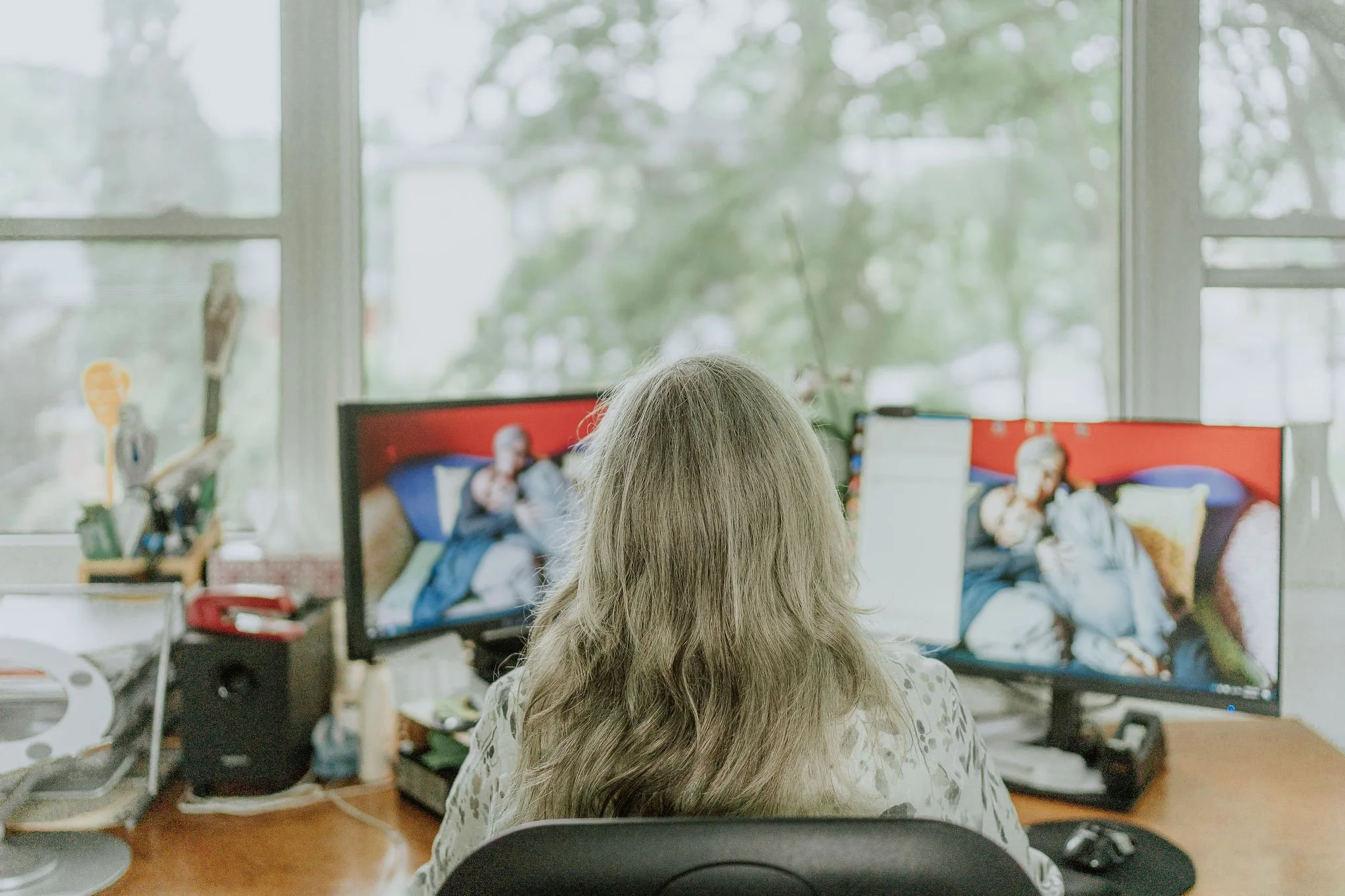
photo credit eyedostudios
This year, I was honoured to interview 25 lane changers. Last Sunday, I brunched with a handful of them. You can thank or blame them for today’s post because they encouraged me to write about my own lane changes. Truth is, I’ve written weekly about my lane changes for nearly five years. They’re summarized at the bottom of this post, with links to prior blogs, in case you missed them.
When interviewing my lane changer subjects, I ended each interview with a few more reflective questions. This week I posed those same questions to myself.
What emboldened you to make the changes you made?
The inspiration for wanting to change and maybe the genetic need to do so comes from my father for whom anything seemed possible. But as a white, middle-class, able-bodied, cis-gender native speaker of English, most things were possible and because of that, his lane changes were all voluntary. He chose to emigrate from his country of origin to Canada, and then moved from one interest to another throughout his adult life without fear or regret. It was easy and it all worked out.
Perhaps the source of the boldness, though, was actually my mother. Her involuntary lane changes of moving first to Canada with her family and eventually to Wingham’s snow belt (always a source of stress for her) and then later, the big shifts involving widowhood and becoming elderly, were all met with the attitude common of English women of her generation:“well, you HAVE to.” When making voluntary lane changes, like selling the house Dad built for their retirement and moving into the retirement home, she did so with a great deal of planning and organization. I inherited that cautious approach to lane changing — like her, my lane changes are prefaced by a long period of monitoring traffic, checking all the mirrors, looking over my shoulder a couple of times, putting my turn signal on, and finally, moving over confidently, knowing with all that prep, it’ll work out.
Mom prepared for her boldest voluntary step — her decision to take the offramp from life’s highway —in ways that only became obvious in the days leading up to her death. She even favoured a date early in August so we’d have time to get her unit cleaned out before month’s end, to allow someone else to move in sooner. Her pre-death organization and her determination to become assessed for MAiD will inspire me until the end of my own days.
How did others in your life respond to your shifts?
Most of the women I’ve interviewed reported finding the support they needed for smooth transitions, although many noted their parents had some difficulty accepting the non-linear nature of their lives. It must be tough to see children give up lives that seem to work and make sense for ones that bring the uncertainty that often comes with lane-changing.
Not so for me. My parents’ hands-off approach to my life often seemed unmooring or even uncaring, but it certainly gave me freedom to do as I wished without disappointing them. Over the years, my friends have been more actively encouraging, although surprisingly many are troubled by me no longer doing the things I used to do — ‘well, one day you’ll play cello again,’ they say. Maybe. Probably not. I’ve already done it! Giving up my law licence too made some antsy. Truth is, if I really NEED to practise law again, I can get the licence back. But all my lanes are one-way — I’d never back up on the highway.
What surprises resulted from your lane changes?
My shifts have been so well planned and signalled with active shoulder-checking there hasn’t been much room for unexpected outcomes. That said, despite always moving forward on that one-way highway, I do often leave breadcrumbs back to the previous lane. Returning from law school is the only time I have ever used that breadcrumb trail. I’ll be honest — I was bluer than I’d ever been while driving those 4400 kilometres from Victoria to Toronto and for the first few months home in Ontario. That was not such a good surprise.
Other changes have brought wonderful surprises. Even though my love affair with Jack ended decades too soon, it brought me to Weston, a community so far north of St. Clair, I couldn’t imagine being happy here. Now I cannot imagine leaving. But Jack brought even more surprises: I inherited friendships with Jack’s kids and grandkids; I became a confident cook and host; and I learned that my skills of advocacy and organization are perhaps more critical to caregiving than the bum-wiping and brow-mopping skills I don’t have.
If you had to do it all over again, would you?
Of course! Even the turmoil I experienced during Jack’s illness and death meant I also benefited from our love. If his cancer and medically assisted death were unavoidable then I’m glad I had a chance to learn so much from that experience too.
Do you think you’ll make another lane change?
Nearly all my lane changer subjects have said “likely.” But not me. I always view my lane as permanent — professions, homes, friends, interests, etc. Until I don’t and then, like a bullet, I find a new lane and make a clear plan to safely insert myself into it. It’s just how I roll.
I will continue looking for lane changers for future profiles. For now, though, I’m hanging up my interview notebook and getting back to more focussed attention on my book called — you guessed it — Lane Change! Stay tuned.
***
Nine lanes in six decades:
Lane 1: the Huron County upbringing when I longed for a more urban life while being shaped by the CBC and eccentric parents, more or less in that order, and learning the value of a strong community and the value and hard work of farming.
Lane 2: five years of post-secondary education at Mac and York, finding my place as an adult woman in a man’s world, including the Montreal Massacre, converting me from being merely interested in the role of women in society to being a proud feminist.
Lane 3: 12 years working, first in the City Clerk’s Department where I could model my own management style from the best examples of civic servants; and then in an international environmental NGO where I learned of the nascent climate crisis while (ironically) flying around the world. Decent income allowed me to buys a condo. The bigger legacy? friends whom I’ve carried with me across life’s highway. It was then I also started playing cello, a hobby that sustained me through another two lanes.
Lane 4: three years on the west coast studying law, appreciating ocean, mountains, and walking, and getting a new perspective on Toronto.
Lane 5: returning to Toronto and joining a law practice aiming to make the world a better place. Getting hooked on co-op housing as a model for community empowerment, learning to write clearly and give practical advice, and conquering my 20 year fear of public speaking.
Lane 6: at age 40, being destabilized by the sudden death of my father.
Lane 7: falling in love at age 43 with the man who fixed my fridge and defrosted my heart; buying a house in Weston with him; expanding my worldview with his Polish immigrant perspective; exchanging cello-playing for cooking, hosting parties, dog-owning, and gardening; and gaining stepchildren and step-grandchildren
Lane 8: spending three years in the caregiver lane where I first felt ill-prepared and ill-suited but then discovering the value of my advocacy and organizational skills, especially in facilitating Jack’s medically assisted death seven years ago.
Lane 9: going underground for three years of COVID, emerging as a writer, building a laneway house, leaving my law practice, taking part-time work in the co-op sector, launching my own speaking and consulting venture, being orphaned earlier this year, and weaving new threads into my social tapestry. And in so doing, letting the events of Lane 8 go from my principal preoccupation to a life-altering but no longer overwhelming part of my life.
Curious about my Lane Changer series? Check out my website.
If you like what you’re reading, there is no greater compliment than to become a subscriber. Sign up below with your email address to receive an email with my weekly blog.